
JEUDI éCHOS x UMA SOCIETY
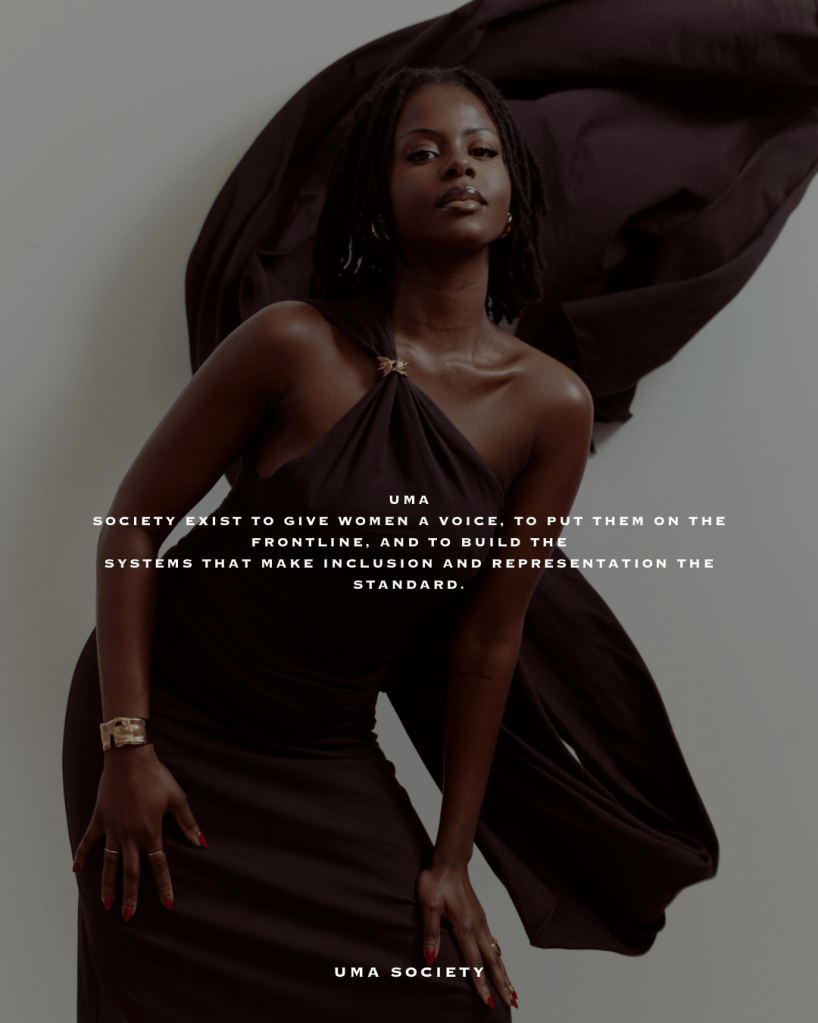
The way we dress, for some races, can be just as important as what we are saying.
For many people, a simple white T-shirt, a pair of jeans and sneakers can be enough to grant them access to almost any space they want to enter. For others, even when dressed as elegantly as possible, suspicion can still arise. We are not all perceived equally.
This is what makes the conversation around Black style so interesting to me.
I often hear people argue that the “old money” aesthetic does not belong to Black identity. But why? Was it truly never part of our culture, or was it simply never represented often enough to become associated with it?
Black luxury has always existed. We have seen glimpses of it in television, film and popular culture: Black characters, families and communities portrayed through wealth, sophistication and refinement. Yet when conversations about luxury or the “old money” aesthetic arise, these representations are often forgotten.
Perhaps it is because people are not accustomed to seeing Black people through that lens. Or perhaps, for some, sophistication is still difficult to reconcile with their idea of Blackness.
When we think of an old-money or minimalist aesthetic, we tend to associate it with refinement, elegance, discretion and sophistication. Yet Black people are often excluded from that image.
Ask someone to describe “Black style”, and you may hear the same familiar stereotypes: baggy clothing, hip-hop-inspired looks, an edgy aesthetic, large hoop earrings and extremely long animal-print nails. When speaking about Africans, the conversation can become equally reductive, often limited to inexpensive or stereotypical interpretations of traditional Kente clothing.
But why is the conversation so rarely extended to the Black man or woman in a perfectly tailored suit, a minimalist dress, polished shoes, subtle jewellery or a timeless, understated wardrobe?
Why can’t Blackness be associated with sophistication too?
And perhaps more importantly, who gets to decide what sophistication looks like?
Does an aesthetic somehow become more legitimate when it is worn, endorsed or popularised by someone outside of the Black community? When a major fashion house takes inspiration from the style of a Black person, that aesthetic can suddenly be reframed as luxurious, refined or desirable. Yet when that same sophistication comes directly from a Black man or woman, why can it sometimes be harder for people to recognise it?
Papa Wemba, one of the great promoters of la SAPE (Société des ambianceurs et des personnes élégantes), famously said, “White people created clothes and Black people created style.”
And perhaps that is the point.
Black style has never been one thing. It has always contained creativity, elegance, experimentation, extravagance and restraint. The fact that one particular version has become more visible than another does not make it more authentic.
A lack of visibility does not mean a lack of existence.
And elegance certainly does not belong to one aesthetic. Wearing monochromatic clothes does not automatically make someone sophisticated, just as wearing bright colours does not make someone less elegant. Style comes from knowing how to combine what you wear, how you carry it and, ultimately, how you feel in it.
Elegance is not confined to one race, nationality, class or culture.
So, to the Black person reading this: the next time you want to dress in a simple, formal and sophisticated way, remember that this, too, can be part of your lineage. You do not need permission to claim elegance. You do not need to fit the stereotype of what Black style is supposed to look like.
Because ultimately, this conversation is not only about clothes. It is about access.
It is about what happens when we enter spaces where we have historically been made to feel that we do not belong. It is about being seen, being taken seriously and feeling confident enough to occupy the room we have entered.
And that is where UMA SOCIETY enters the conversation.
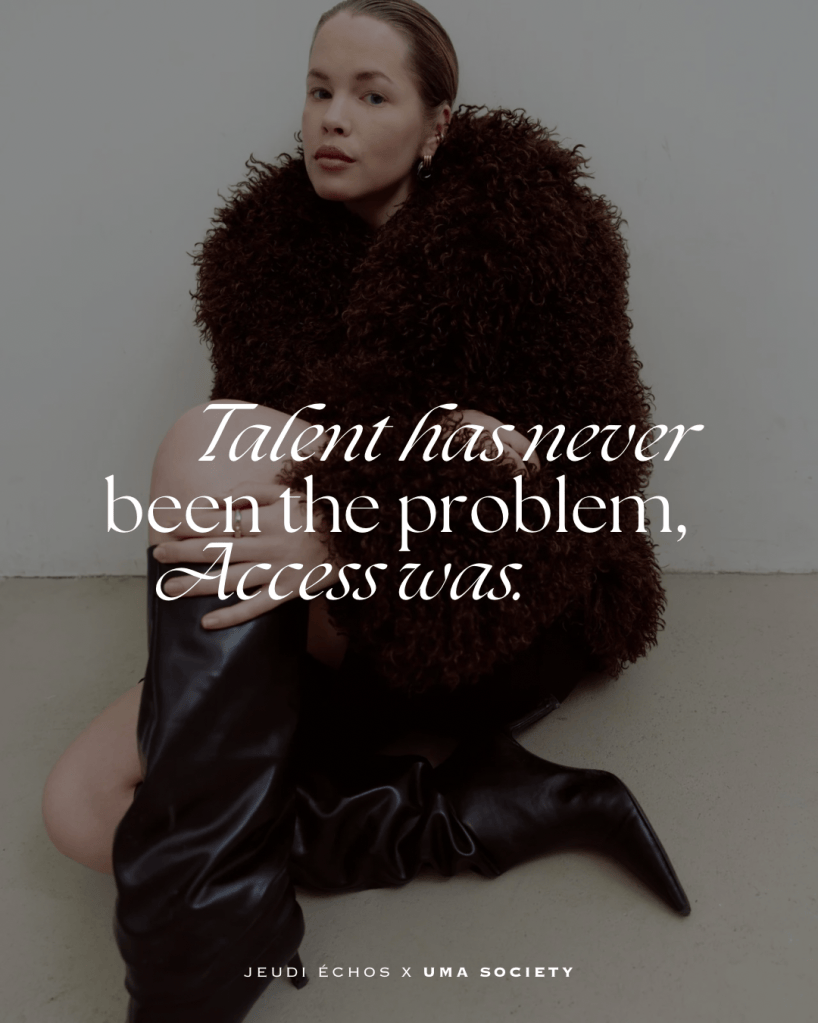
Treshna Ballantine, the founder of UMA SOCIETY, describes the organisation as a platform and community for women in the creative, cultural and media industries. The idea began two years ago, born from a frustration that is familiar to many women: talent was never the problem. Access was.
Sometimes what is missing is not ability, but opportunity. Being in the right room. Being seen by the right person. Having someone open a door that might otherwise remain closed.
UMA SOCIETY was created to help change that.
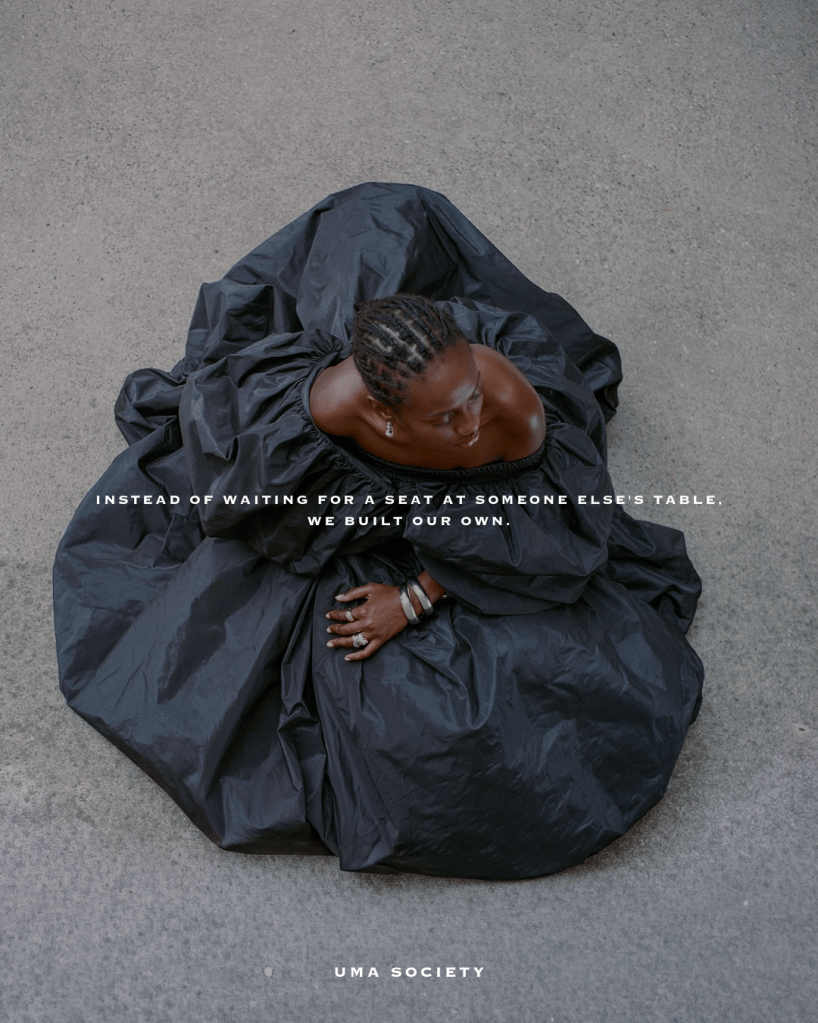
Rather than waiting for someone else to create the opportunity, Treshna built the kind of space she herself had been looking for: one where women could be seen, heard and supported, and where inclusion and representation could become the standard rather than the exception.
Through events and partnerships with people and brands that share those values, UMA SOCIETY creates spaces designed to help women grow in their careers and on their own terms.
In many ways, this is the same conversation.
Because how we dress is one part of how we choose to show up in a room. But confidence is not only about posture and poise. It is also about feeling comfortable enough in your own identity to take up space.
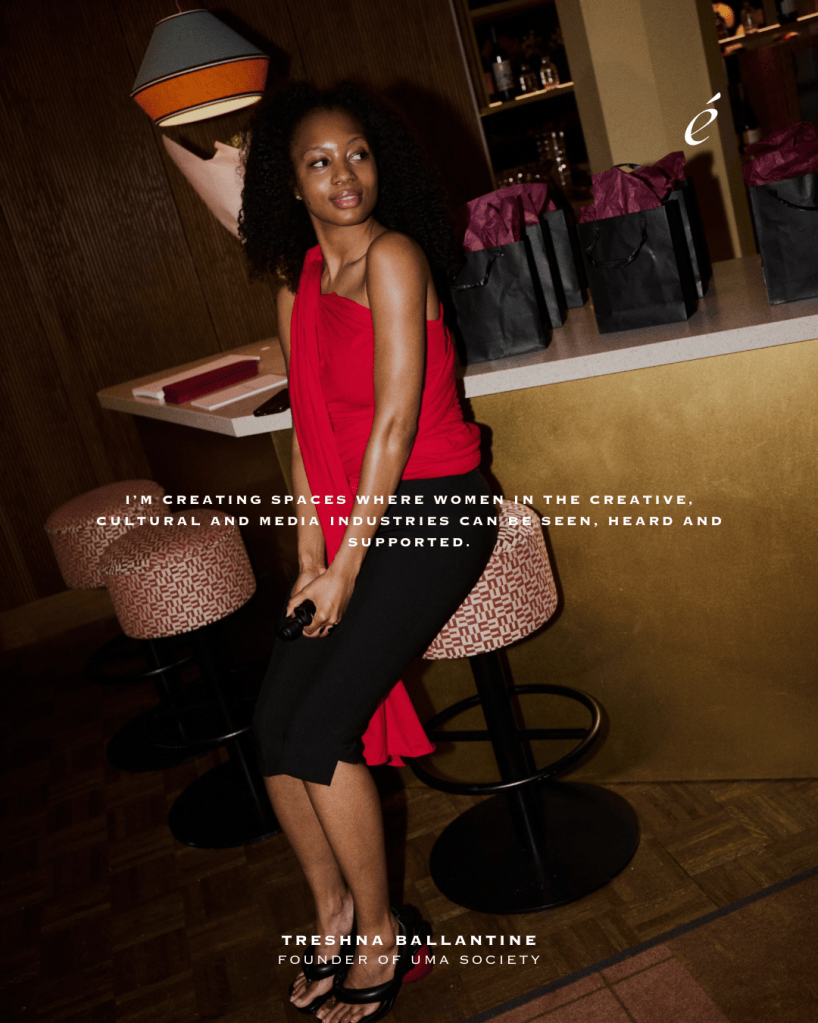
As Treshna, the Founder of UMA SOCIETY, puts it:
“Elegance is the way you move through the world, how you carry yourself, how you act, the grace you bring to everything you touch. To me, elegance is an energy. Something you hold, something you attract. It lives in how you treat people and in how people find themselves drawn to you because of it.”
There is something powerful about entering a room knowing that you belong there.
When you are dressed in a way that makes you feel confident, and you carry yourself with that same confidence, you are not asking for permission to be there. You are simply taking your place.
So the next time you walk into a room, own your look, your elegance and, most importantly, your presence.
Let yourself be seen at a greater distance than the stereotypes that have been placed upon you.
Because a person is not valued by what she wears, but by who is wearing it.

Leave a comment