
BY CHRISTINE AMEFIAM
What once seemed like a bold inspiration, introducing new types of models during the era of “heroin chic”, has now spiralled into a deeply scandalous reality.
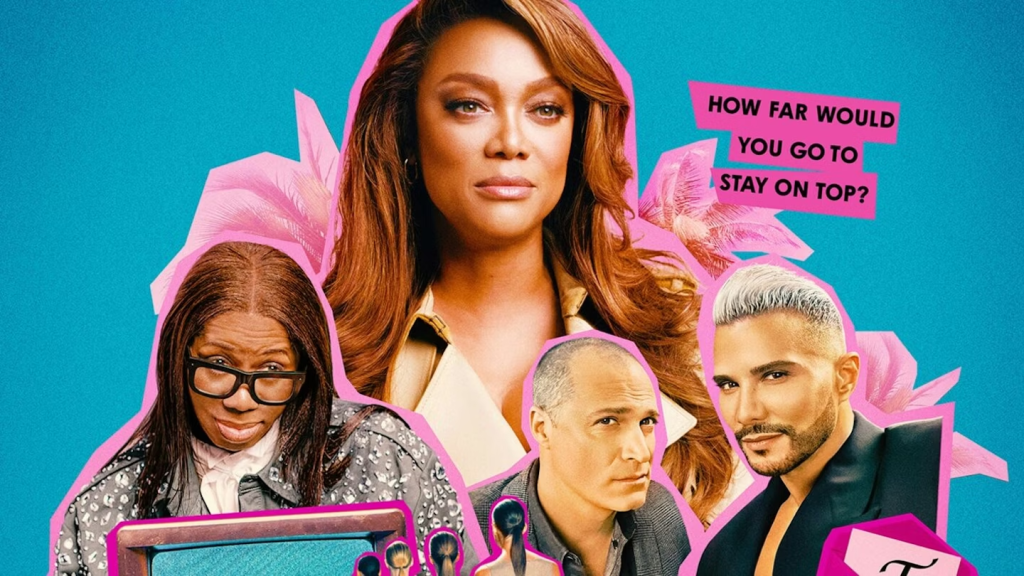
Last week, Netflix released a long-awaited documentary revisiting the early 2000s TV phenomenon America’s Next Top Model. The series explores the origins of the show and uncovers the hidden problems and controversies that ultimately contributed to its downfall.
At a time when reality television was going viral and attracting millions of viewers per episode, a new kind of reality show emerged, one that followed the lives of aspiring models, their struggles, and their personal challenges. The twist was that these were not the typical “perfect” models. Their so-called imperfections were presented as strengths, as symbols of individuality and uniqueness that could lead to success.
What began as a TV program built on seemingly honourable values eventually became a scandal.
The creator of the show, Tyra Banks, was a Black supermodel who, unlike many others, embraced and showcased her curves at a time when the industry demanded extreme thinness. This made her a target of criticism, but it also shaped her vision: she wanted to give value to different types of models, proving that beauty did not only belong to the skinny and tall. “Imperfections” were meant to be redefined as power.
So what went wrong? Was it greed? Success? The fear of losing relevance?
What started as a positive concept became disturbing. The show began exploiting the contestants’ pain, turning intimate traumas into entertainment. It wasn’t just about facing fears, as seen in trendy survival-style TV formats like Survival of the Fittest. Instead, real emotional wounds were recreated for spectacle. One of the most shocking examples was a gun-violence-themed photoshoot, despite the fact that one contestant’s mother had been paralysed in a shooting. Trauma was transformed into content for ratings.
Another serious issue was how the show actively created insecurities in the contestants. There are many powerful examples, but the one that broke my heart as a fellow black woman is Ebony Haith’s from cycle 1. Ebony, a dark-skinned woman, was repeatedly criticised for her “ashy” skin. When this was brought to Tyra Banks, her response failed to protect another Black woman in an industry and society that already devalues Black beauty. Instead of empowerment, the show reinforced harmful standards.
The program also crossed ethical boundaries by broadcasting deeply intimate moments. This wasn’t a show like Too Hot to Handle, where participants fully understand the nature of what they’re signing up for. Many of the girls on America’s Next Top Model were extremely young and vulnerable. The case of Shandi Sullivan is one of the most heartbreaking examples. Her private mistake was exposed to the world, destroying her relationship and damaging her reputation. A struggling teenager who had already left home feeling unloved became publicly shamed on a global scale.
Finally, there is the loss of loyalty and friendships in the pursuit of money and power. “Money is the root of all evil” feels painfully accurate here. In chasing success, Tyra Banks distanced herself from the people who helped build the image and foundation of America’s Next Top Model. The show became successful not only because of the models, but also because of its judges, some bringing diversity in positive ways, others in harmful ones.
Karma feels like the perfect word to describe what followed. After the original members of the show were removed, the decline of America’s Next Top Model truly began.
I genuinely believe Tyra Banks started the show with good intentions. But fear of failure, hunger for relevance, and the desire for more money pushed her beyond ethical limits. The result was a series of harmful, disturbing, and heartless moments. Even though it was “just a show,” real people’s lives were deeply affected.


Leave a comment